For Producers
Develop the project. Keep the vision.
Creative Purpose turns original concepts, acquired IP, and promising ideas into developed screenplays, without you having to assemble and independently manage an entire writing process. We curate a writers’ room suited to the project, coordinate the development journey, and work collaboratively with you, so your creative vision guides the project at every stage.
Think of us as an extension of your creative and development capabilities, not a replacement for your role.
That works two ways: you fund development of your own concept or IP as a paid engagement, or take one of our completed scripts under an option or purchase deal.
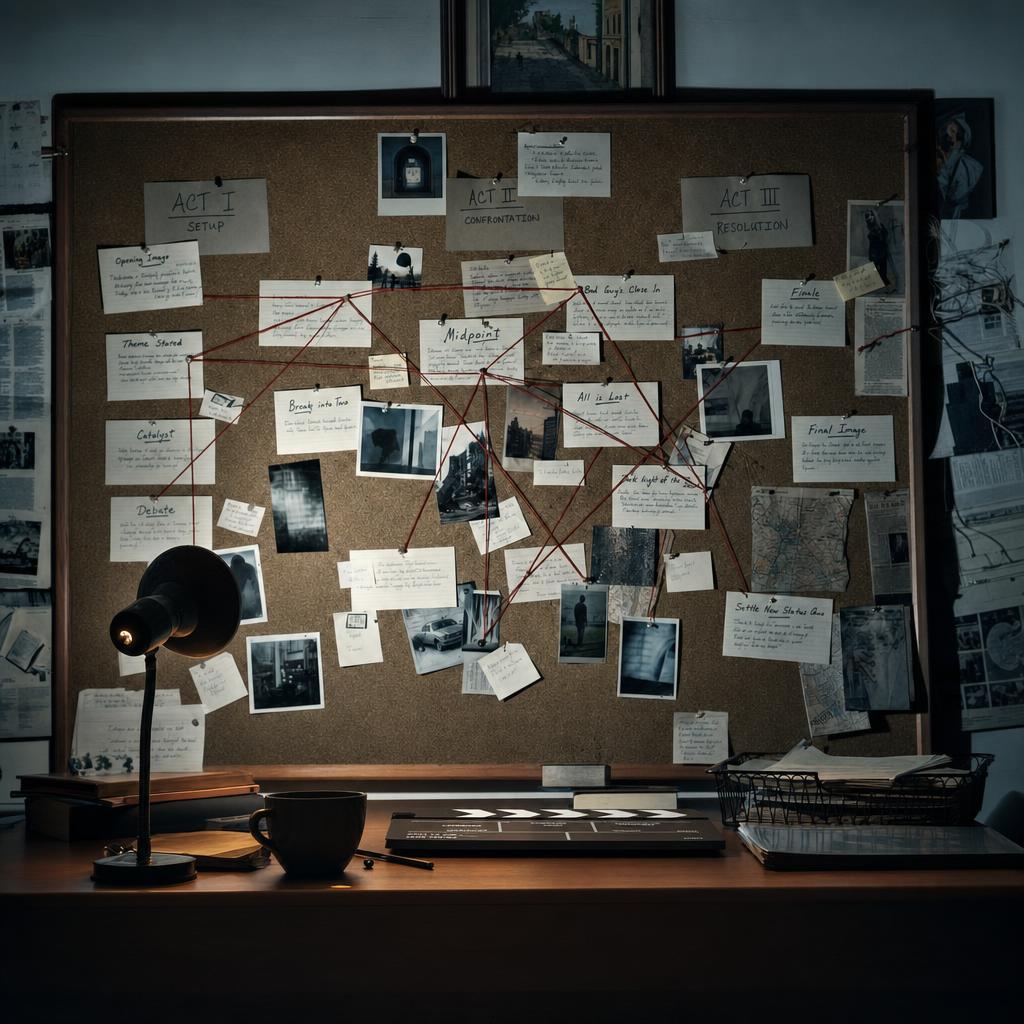
Built for the realities of development
More projects than you can develop
Your slate has more potential than your bandwidth. A curated room gives a promising project a dedicated creative team, without pulling you into running a writing process.
IP without a screenplay strategy
You’ve acquired the rights. Now the property needs characters, structure, and a story that works as a film. The room builds the screenplay development path around the material.
A concept that needs to become a story
A strong premise isn’t a screenplay. Our writers explore multiple creative directions together, then converge on the approach most worth developing.
The time and expense of traditional development
Solo-writer engagements, serial rewrites, and uncoordinated drafts are slow and costly. An organized room compresses exploration into a coordinated process.
The writers’ room experience
What development looks like with us
You get three curated writers and a dedicated development producer without assembling or managing a writers’ room yourself. The development producer coordinates the team and keeps development aligned with your objectives.
01
Bring the project
Bring a concept or existing IP. We establish the creative direction and objectives together.
02
We build the team
Three writers are selected for complementary strengths; one serves as the creative lead. A development producer oversees the engagement.
03
The room develops
The team develops the story toward the agreed deliverables while the development producer coordinates the process.
04
You review at milestones
You give input and review the work at agreed stages. The development producer carries your direction to the writers.
The writers behind the room
Rooms are curated from an established network of 30+ accomplished screenwriters, including Black List writers, Nicholl Fellows and finalists, Emmy winners, and recognized selections from Sundance, Austin, and other top screenwriting competitions, whose work has appeared on Netflix, HBO, Disney, Pixar, Apple TV+, and Nickelodeon.




Frequently asked questions
How many writers work on a project?
Each project has three curated writers, selected for complementary creative strengths, plus a dedicated development producer who oversees the process. One writer serves as the creative lead, keeping a unified storytelling voice, while the development producer coordinates the team, carries feedback, and is your primary point of contact.
Does the producer pay for development?
Two paths, and you pay differently under each. If you want one of our completed scripts, that's an option or purchase deal: you pay for the rights to the script itself, and there's no development fee. If we develop your concept or IP, then development is paid work. The cost depends on the team your project needs: a room of WGA writers carries guild minimums, while a non-WGA team comes in lower. In each case the model is designed to be significantly more cost effective than building that team yourself, with several writers developing one story together. The specific arrangement is established together before development begins.
How much does it cost to develop a film with Creative Purpose?
Development is the paid path; taking one of our completed scripts is an option or purchase deal instead. Development costs depend on the project, the writers involved, the scope of work, and the agreed deliverables. Our network includes both WGA and non-WGA writers. Projects that call for WGA writers carry guild minimums, while non-WGA teams offer more flexibility. Once we understand your project and creative objectives, we can discuss an appropriate structure. See a cost breakdown.
How do writer compensation and ownership work?
Writers are paid for the work they do in the room. The rate depends on the team: WGA writers carry guild minimums, while non-WGA teams offer more flexibility. In each case the cost covers a full team developing one story through a more involved process, not a single writer. Screenplay ownership and subsequent sale or production arrangements are set out in written agreements appropriate to the project, which we explain before development begins so all parties understand their commitments, ownership interests, and rights.
How does Creative Purpose work with WGA writers?
Creative Purpose works with writers under project-specific agreements that take applicable guild requirements into account. The appropriate arrangement depends on the writers involved, the production parties and the structure of the development engagement. We address these considerations when establishing each project.
How involved will I be in development?
We build the writers’ room around your project’s creative objectives. We begin by establishing a shared vision, then agree on creative discussions, milestone reviews, and feedback points throughout development, whether you prefer to participate closely in story development or review outlines and drafts at defined stages. The collaboration is tailored to the project.
How long does development take?
A script developed through multiple drafts is typically completed within three to four months, depending on the project.
Ready to develop your next project?
Tell us about the idea, the IP, or the project you can’t crack, or ask us what we’re developing that might fit your mandate.